
Shoplifting remains a major challenge for retailers of all sizes. From small convenience stores to large supermarkets and retail chains, theft can reduce profits, increase operating costs, and create a less secure shopping environment. As retail environments become more technology-driven, businesses are turning to smarter Anti-Shoplifting Solutions to protect merchandise without negatively affecting the customer experience.
Modern security technology goes beyond traditional alarms. Retailers can now combine electronic security systems, surveillance, artificial intelligence, and real-time monitoring to identify suspicious activity and respond quickly.
Here are five innovative Anti-Shoplifting Solutions that can help retailers improve security and reduce inventory losses.
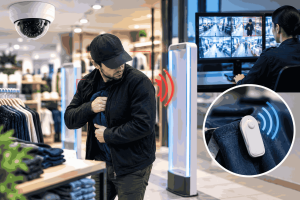
1. Electronic Article Surveillance (EAS) Systems
Electronic Article Surveillance (EAS) remains one of the most widely used retail security technologies. These systems use security tags or labels attached to merchandise and detection antennas installed at store exits.
When a customer attempts to leave with an item that has not been properly deactivated or removed at checkout, the system can trigger an alarm.
Modern EAS technology offers several advantages:
- Helps deter potential shoplifters
- Protects high-value merchandise
- Provides visible security at store entrances and exits
- Can be integrated into existing retail security systems
- Supports efficient inventory protection
EAS is particularly useful for clothing stores, electronics retailers, pharmacies, supermarkets, and department stores.
2. AI-Powered Video Surveillance
Traditional security cameras record activity, but advanced video surveillance can do much more. AI-powered cameras can analyze movement and identify unusual behavior in real time.
For example, intelligent video analytics can help detect behaviors such as repeated movement around a particular product area, suspicious activity near exits, or unusual interactions with merchandise.
Instead of requiring security staff to watch multiple camera feeds continuously, AI can highlight potentially important events for review.
Key benefits include:
- Real-time activity monitoring
- Faster identification of suspicious behavior
- Reduced dependence on constant manual surveillance
- Improved incident investigation
- Better visibility across large retail spaces
When implemented responsibly, AI surveillance can become one of the most effective Anti-Shoplifting Solutions for modern retailers.
3. Smart Product Tags and RFID Technology
Radio Frequency Identification (RFID) technology provides retailers with detailed visibility into their inventory. RFID tags can transmit information about individual products, allowing businesses to track merchandise throughout the store and supply chain.
Unlike conventional barcodes, RFID systems can identify multiple tagged items without requiring each product to be individually scanned.
This can help retailers:
- Monitor inventory more accurately
- Identify missing products faster
- Reduce inventory discrepancies
- Improve stock management
- Strengthen merchandise protection
RFID can also work alongside other retail security technologies. By combining inventory intelligence with physical security systems, retailers can create a more comprehensive approach to loss prevention.
4. Smart Exit and Sensor-Based Security Systems
Retail exits are critical points for preventing unauthorized merchandise removal. Smart sensors and advanced exit-monitoring systems can provide an additional layer of protection.
These systems can include door sensors, motion detection, security gates, and integrated alarm technologies. When connected with surveillance systems, retailers can receive more context about an event rather than relying on an alarm alone.
For example, if an EAS alarm is triggered, security personnel can review nearby camera footage to determine what happened.
This integrated approach can make security responses more efficient while minimizing unnecessary disruption to legitimate customers.
5. Remote Monitoring and Integrated Security Platforms
Retailers operating multiple locations often face difficulties monitoring security consistently. Remote monitoring platforms can help businesses oversee multiple stores from a centralized location.
Security teams can receive alerts, review video footage, monitor alarms, and investigate incidents remotely.
Integrated platforms can bring several technologies together, including:
- CCTV and video surveillance
- EAS systems
- Access control
- Sensors and alarms
- Remote monitoring
- Inventory management technology
The biggest advantage is coordination. Instead of using separate security technologies that operate independently, retailers can create a connected security environment.
Why Retailers Need Modern Anti-Shoplifting Solutions
Shoplifting prevention is no longer simply about installing an alarm at the exit. Retailers need a layered strategy that combines prevention, detection, monitoring, and response.
The right Anti-Shoplifting Solutions can help businesses protect valuable inventory while maintaining a welcoming shopping environment. Technology can also help employees respond to potential incidents more efficiently and provide useful information for investigating losses.
However, technology should be combined with employee training, clear security procedures, good store design, and appropriate customer-service practices.
How to Choose the Right Solution
Every retailer has different security requirements. Before investing in a system, consider factors such as store size, product value, number of locations, customer traffic, existing security infrastructure, and budget.
A small retailer may benefit from EAS and strategically positioned cameras, while a large retail chain may require an integrated combination of RFID, AI video analytics, EAS, and centralized monitoring.
The best approach is usually a layered security strategy rather than relying on one technology.
Conclusion
Shoplifting can have a significant impact on retail profitability, but modern technology gives businesses more options for protecting merchandise. From EAS and AI-powered surveillance to RFID, smart sensors, and remote monitoring, today’s Anti-Shoplifting Solutions can help retailers build stronger and more responsive loss-prevention strategies.
The key is choosing technologies that fit the retailer’s specific environment and combining them with effective security procedures.
Ready to strengthen your retail security? Explore moderns Anti-Shoplifting Solution and choose a security strategy designed around your store’s needs.
Frequently Asked Questions

1. What are Anti-Shoplifting Solutions?
Anti-Shoplifting Solutions are technologies, systems, and strategies designed to deter, detect, and help prevent unauthorized removal of merchandise from retail stores.
2. Which anti-shoplifting system is best for retailers?
There is no single solution that works for every retailer. EAS, surveillance cameras, RFID, smart sensors, and remote monitoring can be combined based on the store’s products, layout, size, and security requirements.
3. Can AI cameras help prevent shoplifting?
Yes. AI-powered video analytics can identify certain unusual patterns or activities and alert security personnel, helping them focus attention on potentially important events.
4. Is RFID useful for shoplifting prevention?
RFID is primarily an inventory visibility technology, but it can support loss prevention by helping retailers identify inventory discrepancies and track merchandise more efficiently.
5. Should retailers use more than one security system?
A layered approach is generally more effective than relying on a single system. Combining technologies such as EAS, surveillance, sensors, and inventory tracking can provide broader protection.